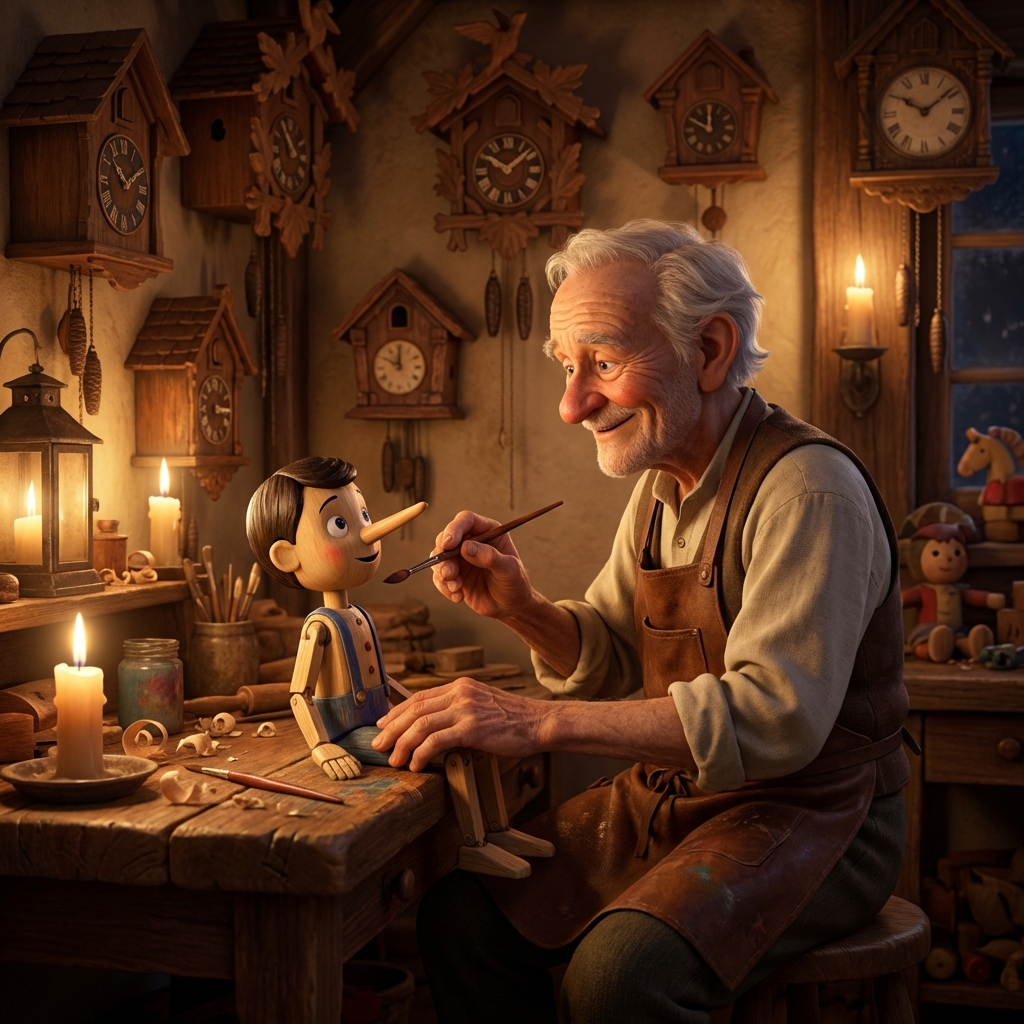
The workshop was a sanctuary of pine-scented air and ticking hearts. Geppetto, with silver hair and hands calloused by love, gave the final stroke of paint to a puppet made of simple pine. As the candlelight flickered, the old man whispered a wish to the silent cuckoo clocks on the wall: "If only you were a real boy, my little Pinocchio."
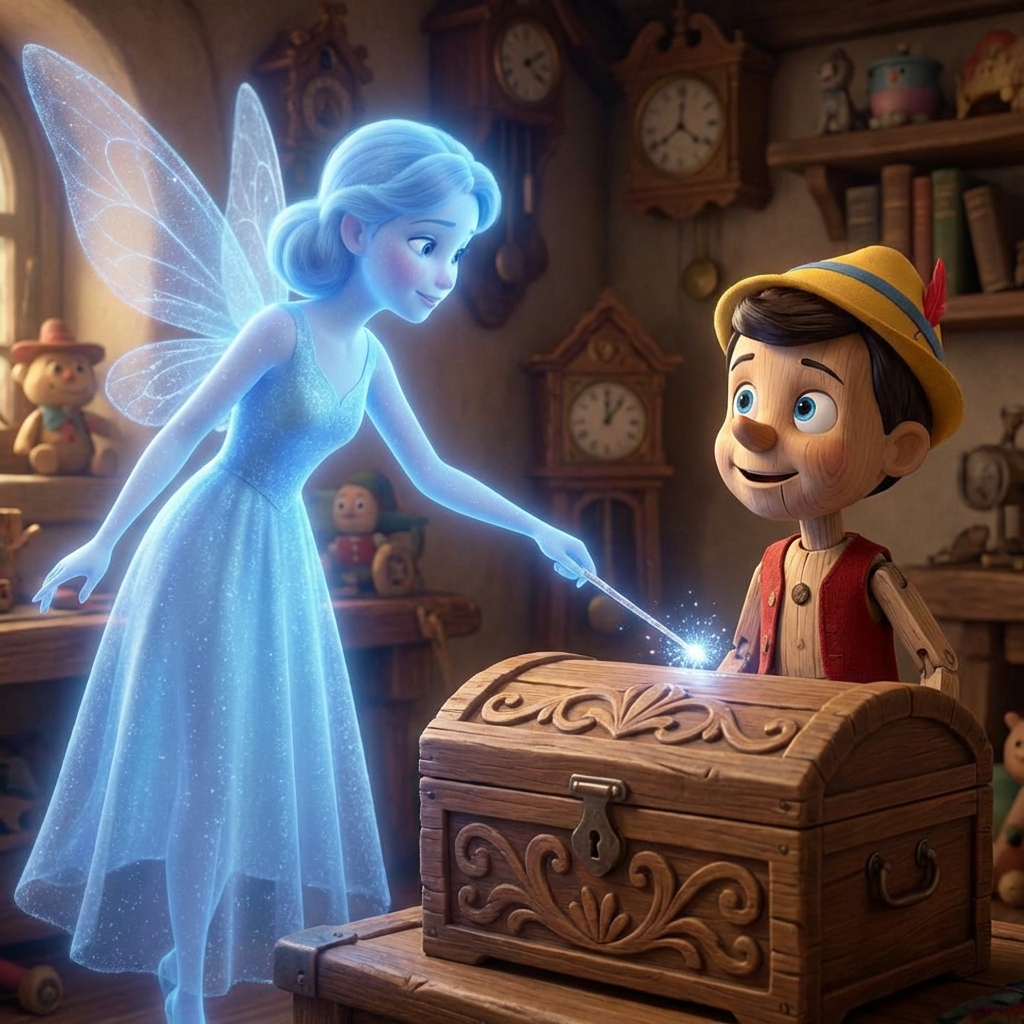
When the peaceful night arrived, a bright star shone above. The Blue Fairy appeared in a gentle blue glow. She tapped Pinocchio’s wooden chest with her wand, giving the puppet a magical life and warmth.
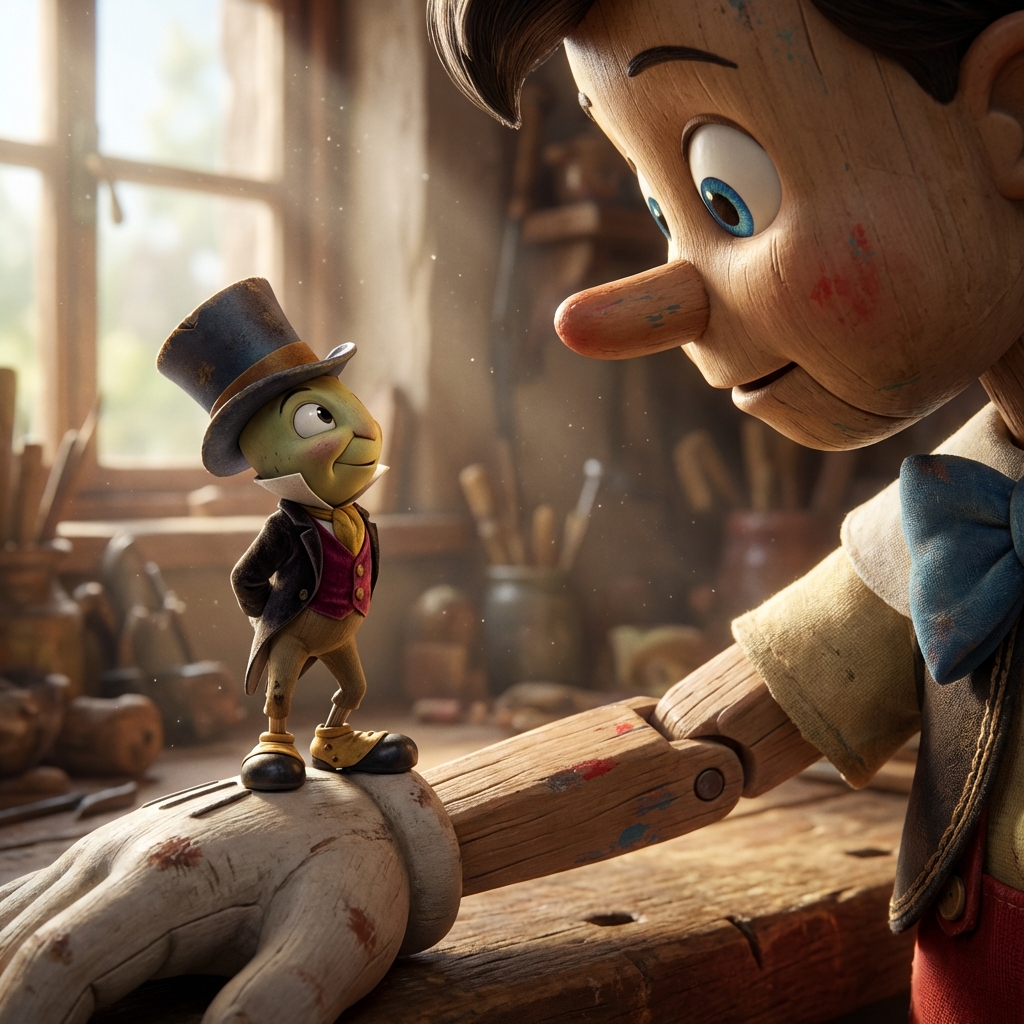
From a miniature music box, a tiny cricket in a top hat leapt onto Pinocchio's shoulder. Jiminy Cricket adjusted his vest and looked into the puppet's painted eyes. "A conscience is that still, small voice that people won't listen to," he explained, "and I’m here to make sure you do."
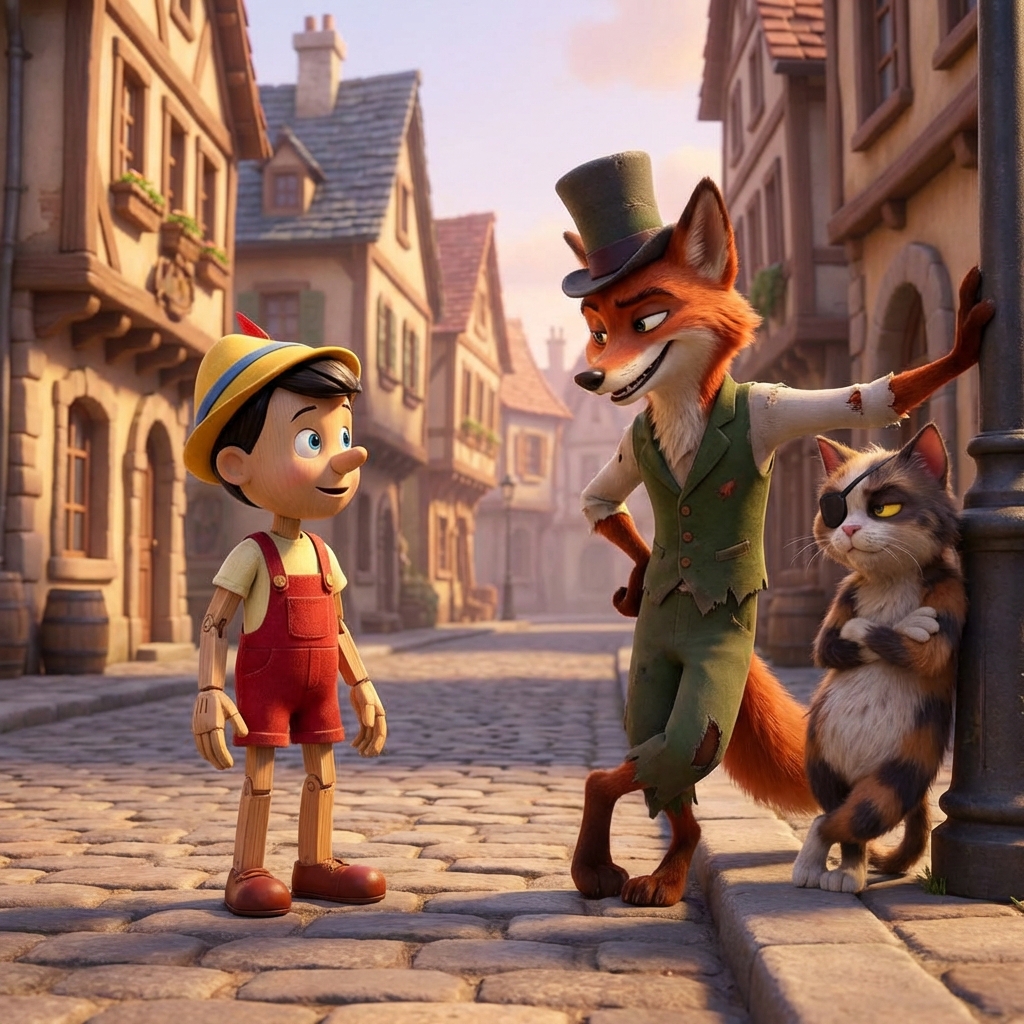
Pinocchio met two tricky strangers on the street. The Fox and the Cat pretended to be his friends. "Why go to school," the Fox said slyly, "when you could be a famous actor in the puppet show?"
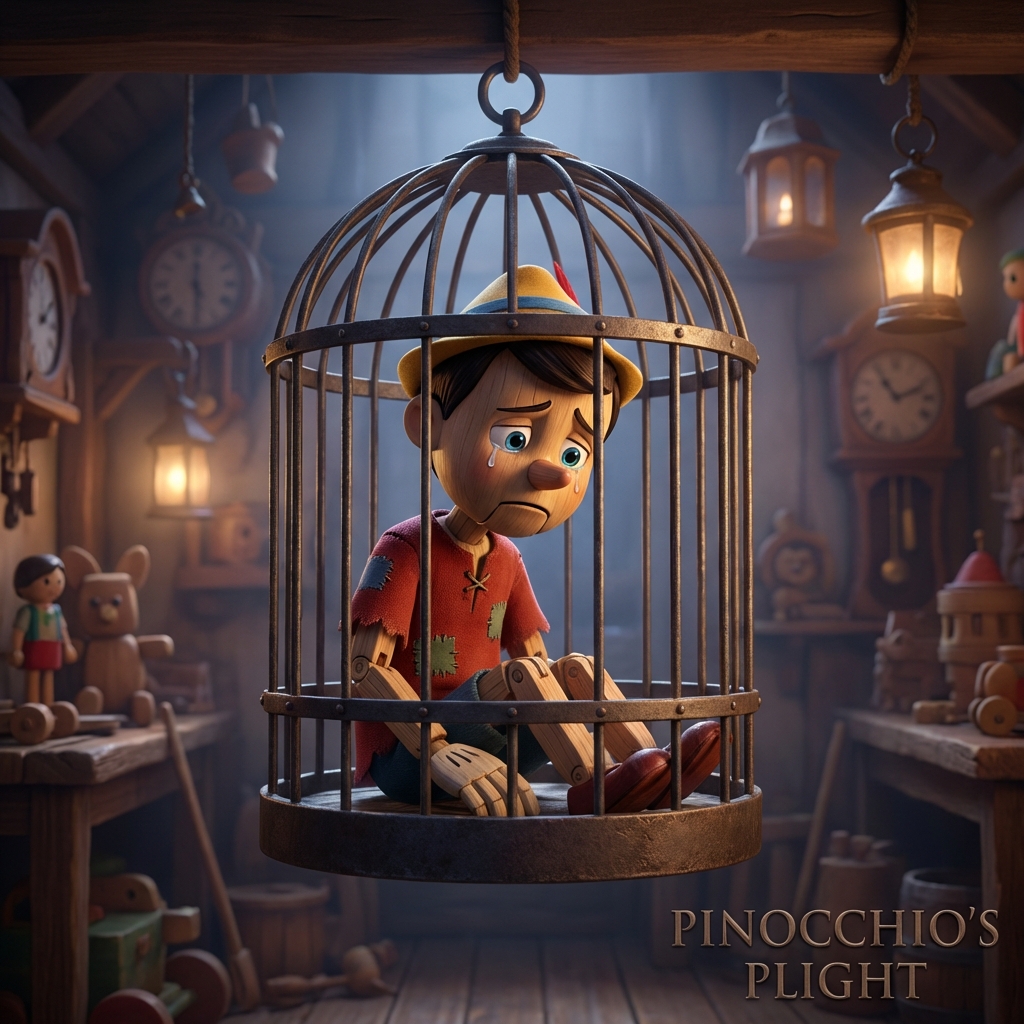
Pinocchio performed wonderfully on stage. But afterward, the puppeteer Stromboli locked him in a large birdcage. Pinocchio held the bars, realizing he was trapped and missed his father, Geppetto.
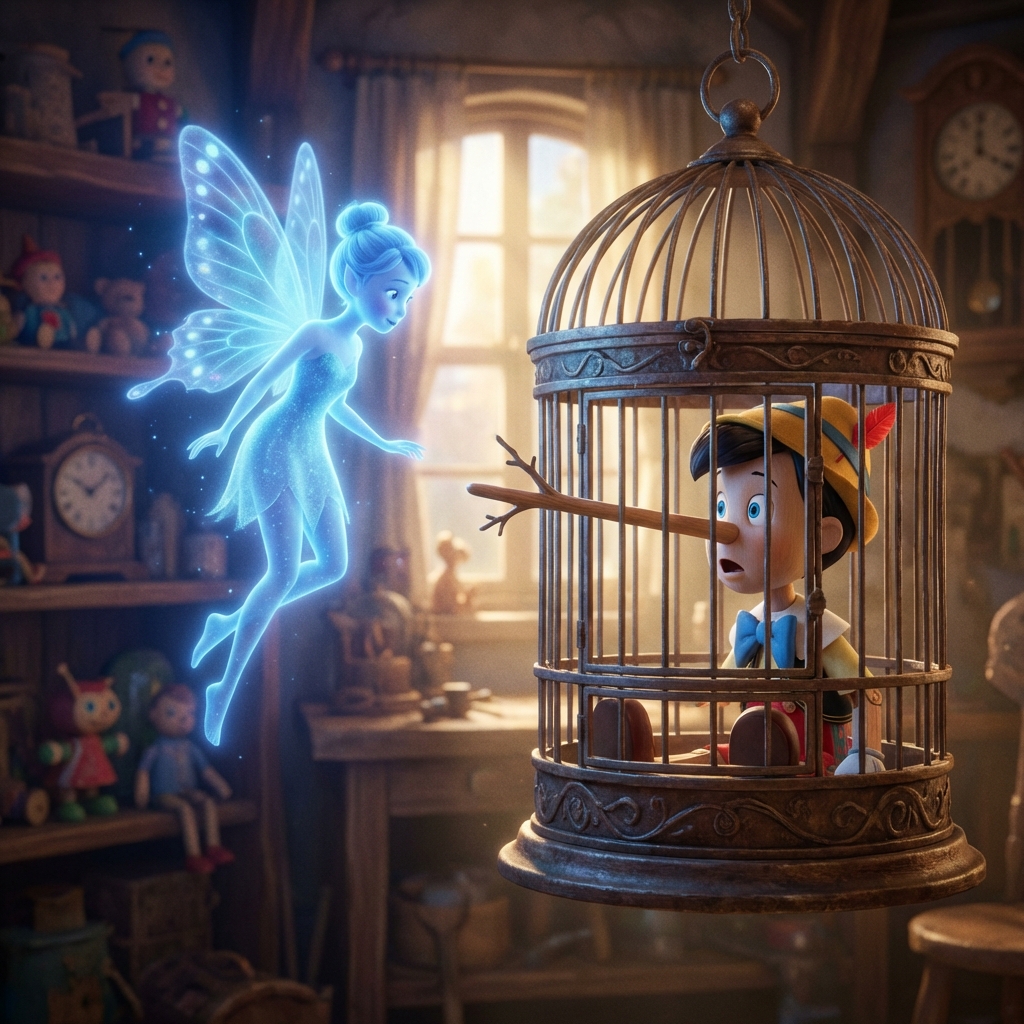
The Blue Fairy appeared in the gloom of the cage, her eyes full of a sad wisdom. When she asked why he wasn't at school, Pinocchio began to weave a tale of kidnappers and monsters. With every lie, his wooden nose stretched further, sprouting green leaves at the tip as the truth was written on his face.
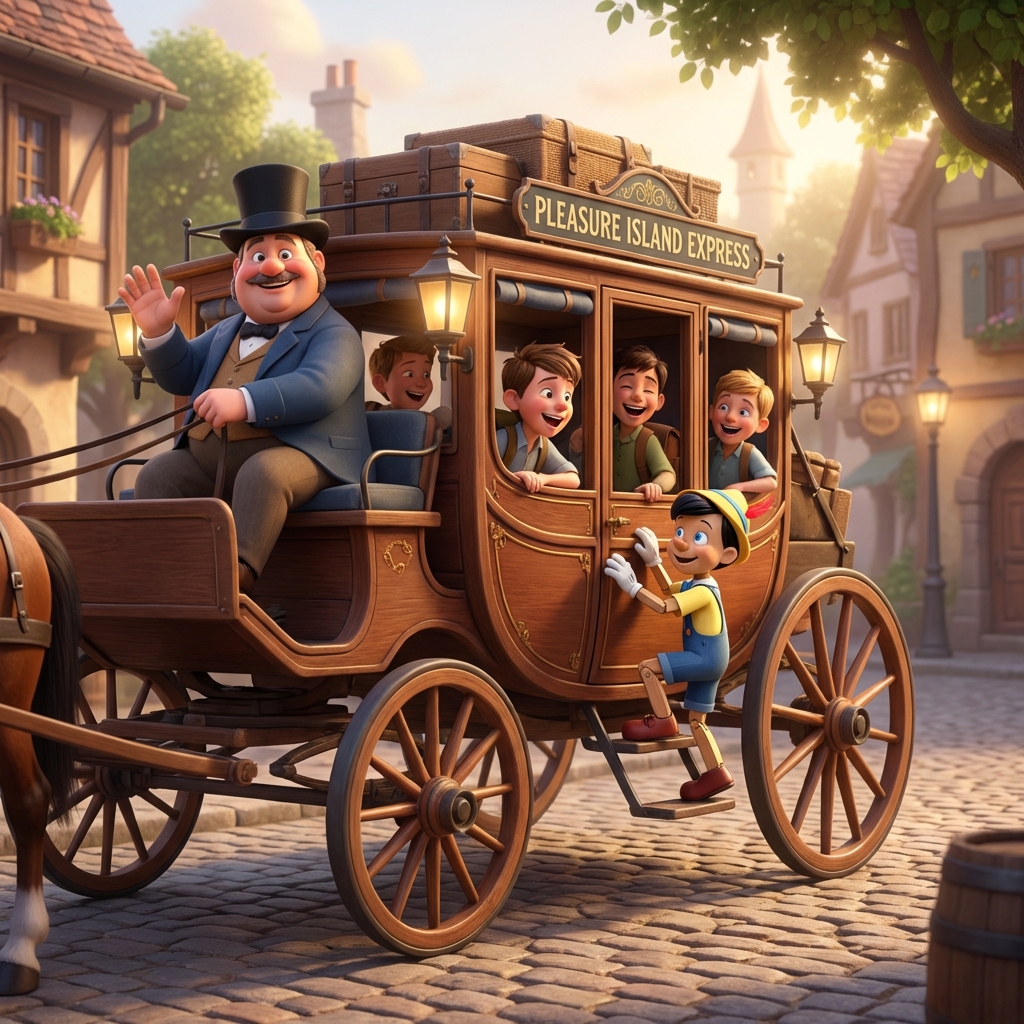
A large coach arrived to take boys to a fun land. The driver smiled and promised them candy and no homework. Pinocchio climbed aboard the coach, not hearing Jiminy's warnings.
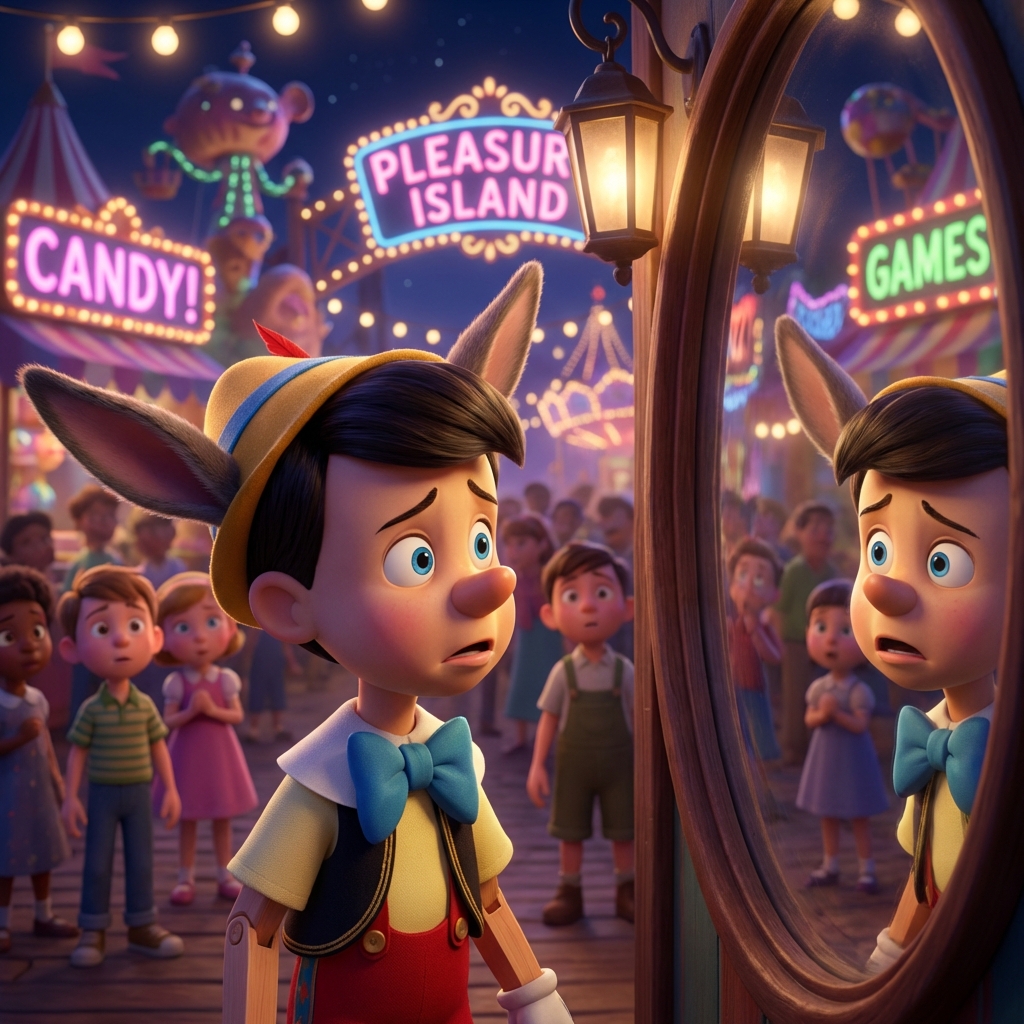
Pleasure Island was a carnival of neon lights and broken rules. But as Pinocchio laughed, he felt a strange tingle in his ears. In the mirror, he saw gray fur sprouting and his wooden feet hardening into hooves. The boys were turning into donkeys, destined for the salt mines of the wicked Coachman.
To leave the scary island, Pinocchio and Jiminy ran to the cliffs by the sea. "We must swim!" Jiminy called out. They dove into the ocean water to escape and find their way home.
Pinocchio returned home, but the workshop was quiet and empty. A dove dropped a letter saying Geppetto had gone to sea to look for him and was swallowed by the giant whale Monstro. "I must save him," Pinocchio said bravely.
In the deep blue ocean, the giant whale Monstro woke up. He opened his huge mouth to catch fish. Pinocchio swam bravely toward the giant whale to find his father inside.
Inside the whale, Geppetto was sitting on a small raft, cold and sad. Pinocchio found him and hugged him tight. Geppetto was so happy to see his little puppet son again.
"We need steam to make him sneeze!" said Pinocchio. They gathered wood and started a small fire. The smoke floated up, tickling the inside of the whale.
Monstro sneezed with the force of a volcano, launching them into the violent surf. As the whale pursued them in a rage, Pinocchio used every ounce of his wooden strength to pull Geppetto toward the shore. He sheltered his father's body with his own as the waves crushed them against the jagged rocks.
Pinocchio lay quietly in the workshop. Geppetto was very sad. Suddenly, a blue light filled the room. The wooden puppet changed into a real boy. He woke up and smiled, "Father, I am real!"