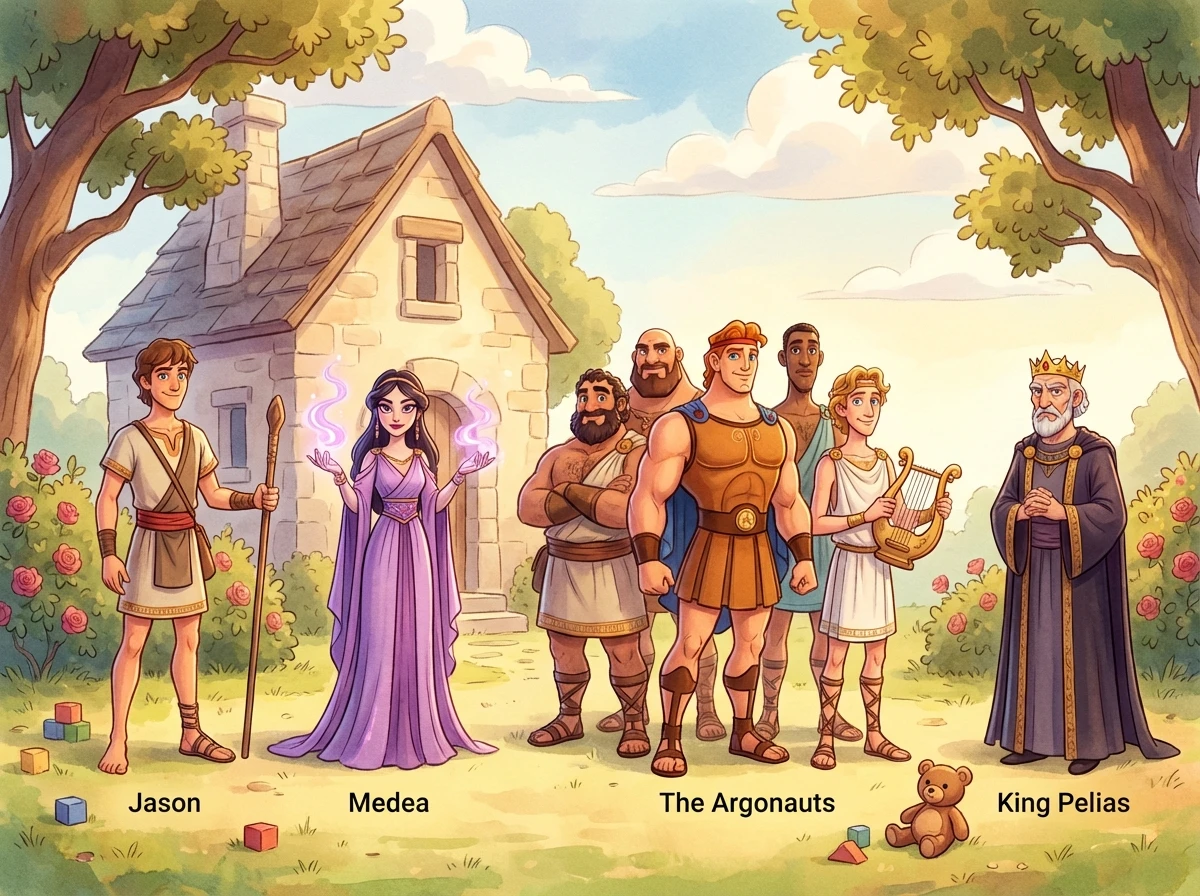
In the kingdom of Iolcos, a wicked man named Pelias seized the throne from his brother, the rightful king. Pelias lived in fear of a prophecy: "Beware of a man wearing only one sandal." This sets the stage for a classic Greek mythology adventure.
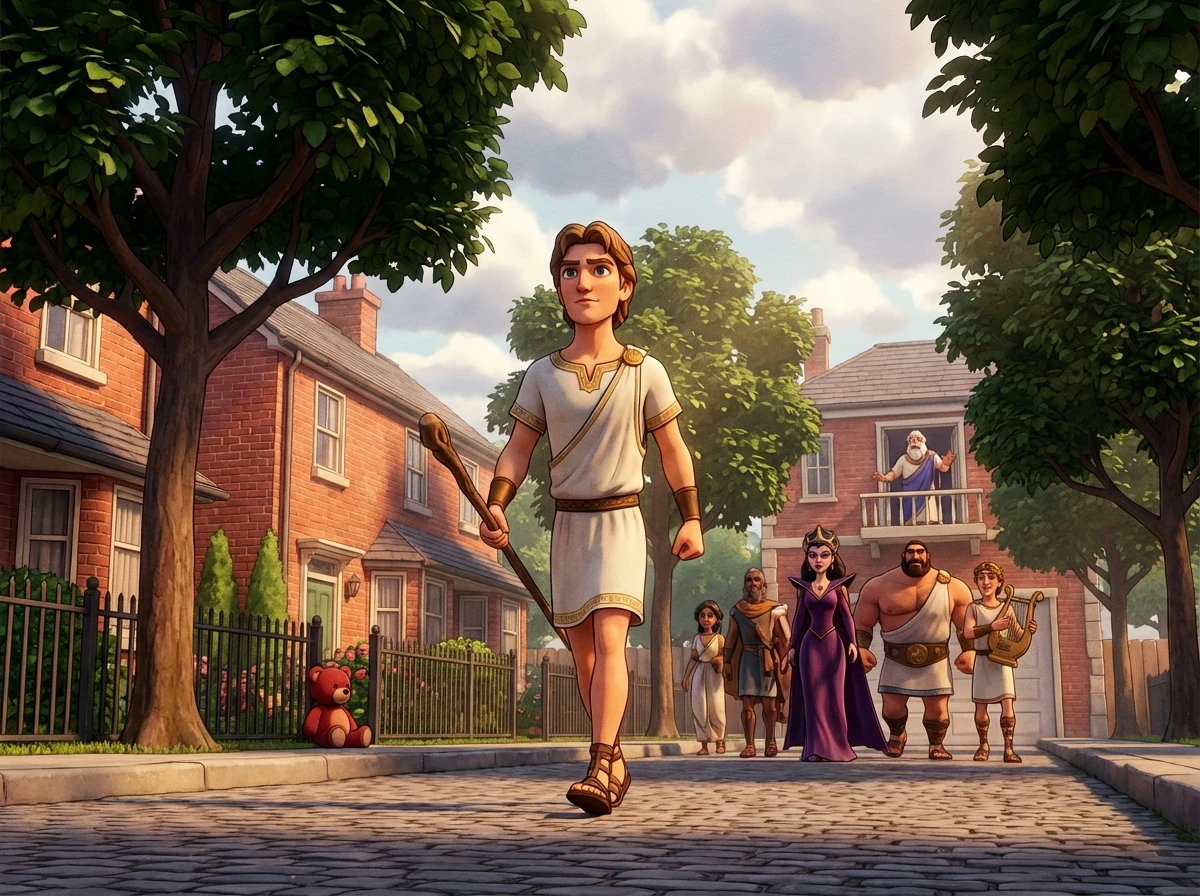
Years later, Jason, the rightful heir who had been raised in secret by Chiron the Centaur, returned to claim his throne. While crossing a river on his way to the city, he lost one of his sandals in the mud (some say he was helping the goddess Hera in disguise). He entered the city with one bare foot. King Pelias froze in terror.
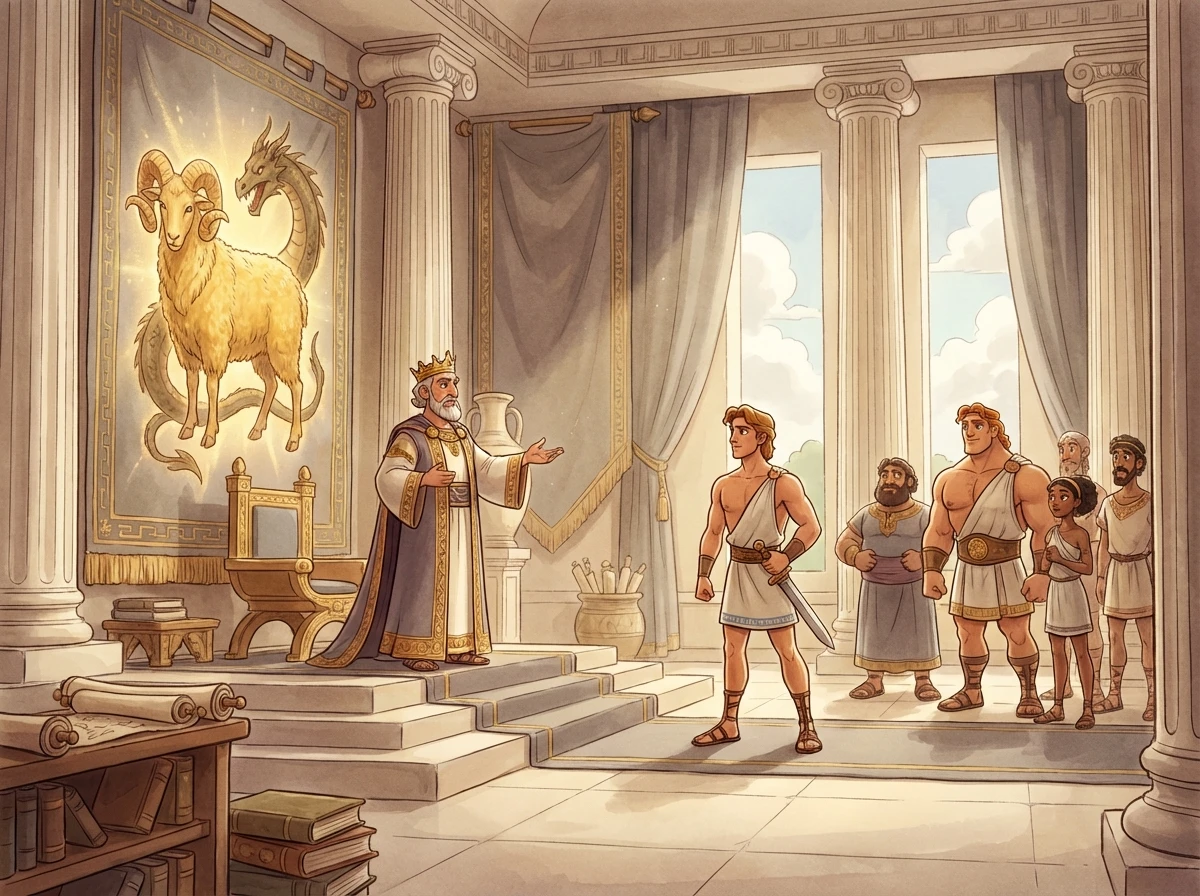
Pelias could not kill Jason publicly. Instead, he devised a trap. "I will give you the throne," Pelias lied, "but first, you must bring me the Golden Fleece." This magical wool of a gold-haired ram was kept in the distant land of Colchis, guarded by a dragon that never slept. Pelias was sure Jason would die trying.
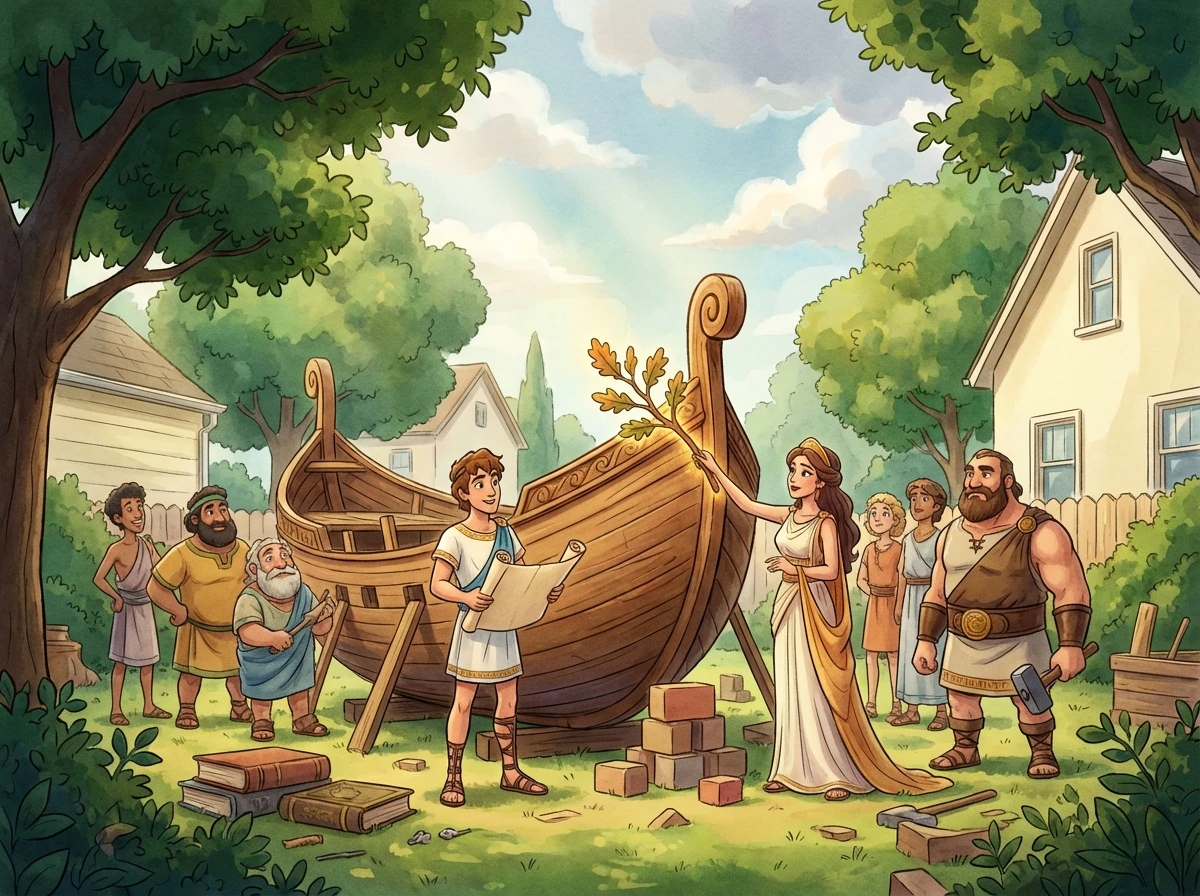
Jason accepted the challenge. He needed a ship like no other. With the help of the goddess Athena, a master shipbuilder named Argus built the Argo. Athena placed a piece of sacred oak from Dodona into the prow, giving the ship the ability to speak and warn the crew of danger.
Jason sent word across Greece calling for heroes. The greatest warriors answered the call. Among them were the sons of the North Wind, the fastest runners, and two legends you already know: the mighty [Hercules] and the master musician [Orpheus]. This was the first "superteam" in mythology stories. Jason recruited the strongest man on earth. Read the [Story of Hercules] to see why he joined the crew.
The journey began. Their first stop was Lemnos, an island inhabited only by women (who had killed their husbands). The Argonauts were welcomed warmly, perhaps too warmly. They almost forgot their quest, delaying for weeks until Hercules shamed them into returning to the sea.
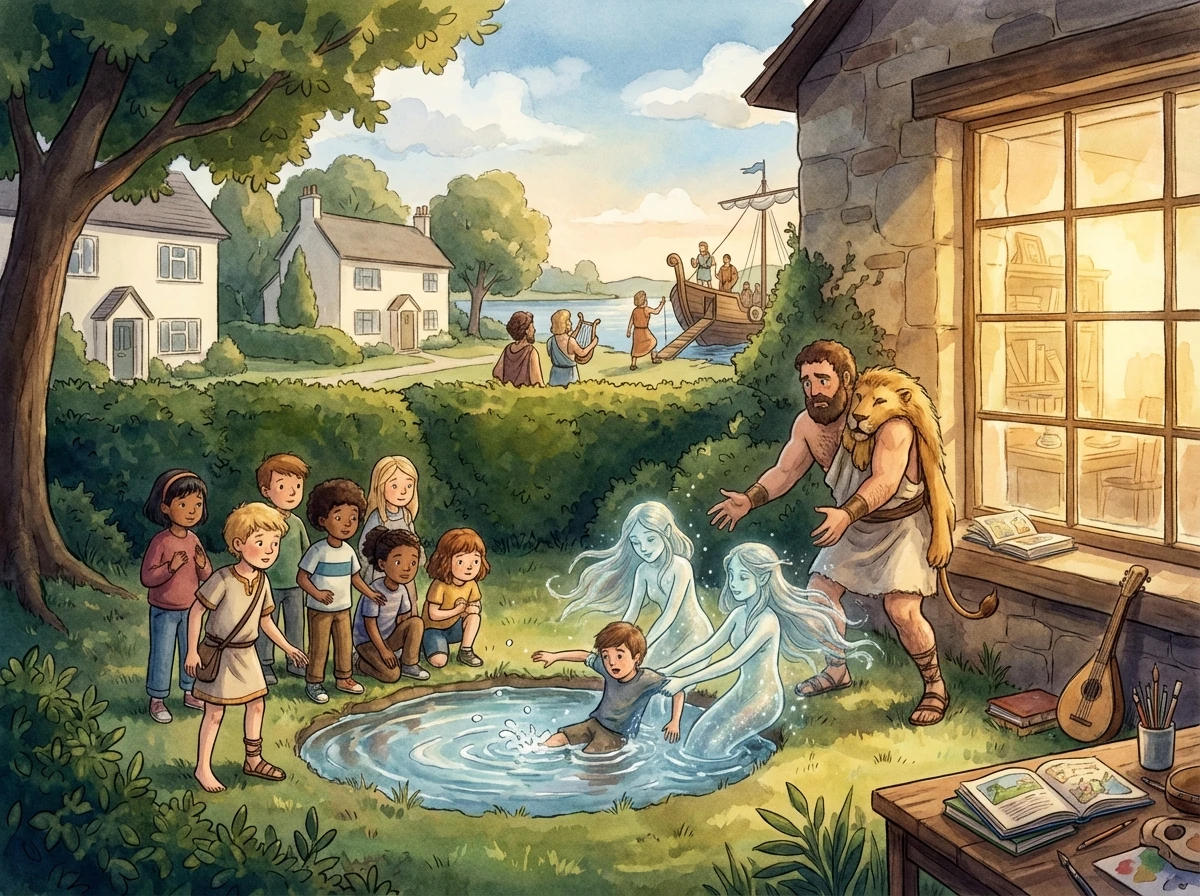
At their next stop, a tragedy occurred. Hercules’s squire, Hylas, was pulled into a spring by water nymphs who fell in love with his beauty. Hercules refused to leave without him. He stayed behind to search, leaving the Argonauts to continue without their strongest member. This connects directly to the [Story of Hercules].
The crew arrived at the home of the blind prophet Phineus. He was starving because every time he tried to eat, winged monsters called Harpies swooped down and stole his food. The Argonauts (specifically the winged sons of the North Wind) chased the Harpies away forever.
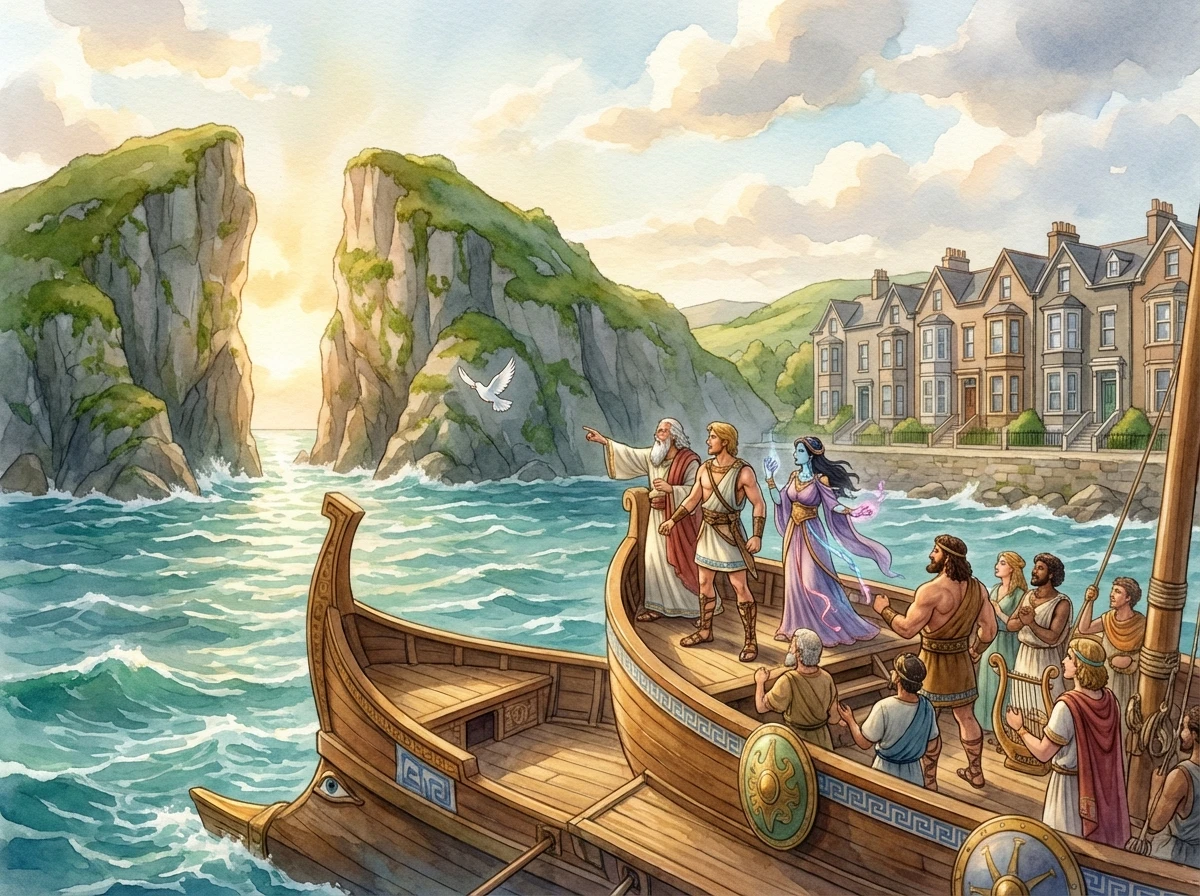
In gratitude, Phineus gave Jason a crucial tip for the next danger: the Symplegades. These were giant cliffs that smashed together, crushing any ship that tried to pass. Phineus told them: "Release a dove first. If the bird makes it through, you can follow."
Jason released the dove. The rocks crashed together, clipping only the bird’s tail feathers. As the rocks slowly pulled apart, the Argo rowed with all its might. Orpheus played a fast rhythm to keep them in sync. They scraped through just as the rocks slammed shut behind them, shearing off the back of the ship.
Finally, they reached the ends of the earth: Colchis (modern-day Georgia). Jason demanded the Golden Fleece from King Aeetes. The King was furious but agreed to hand it over if Jason could complete three impossible tasks in a single day.
The King’s daughter, Medea, was a powerful sorceress. Thanks to the influence of Hera and Aphrodite, Medea fell madly in love with Jason the moment she saw him. She knew her father intended to kill Jason, so she decided to betray her family to save the hero.
The first task was to yoke two bronze-footed bulls that breathed fire. Medea gave Jason a magical ointment that made his skin invulnerable to burns and iron. Protected by her magic, Jason wrestled the beasts to the ground and yoked them, shocking the King.
The second task was to sow dragon’s teeth into the ground. Instantly, an army of skeleton warriors (Spartoi) sprang from the earth, fully armed. Jason remembered Medea’s advice: he threw a stone into the middle of the army. Confused, the skeletons accused each other of throwing it and fought until they destroyed themselves.
The King, seeing Jason succeed, plotted to kill him anyway that night. Medea warned Jason, and they went to the sacred grove where the Golden Fleece hung on an oak tree. Curled around the tree was the dragon that never slept.
Swords were useless against the dragon. This was a job for music. [Orpheus] stepped forward and played a soft, enchanting melody on his lyre. Slowly, the dragon’s heavy eyelids began to droop. For the first time in centuries, the beast fell asleep. The dragon was fierce, but the musician Orpheus had power over beasts, just as he would later charm the guardian of the Underworld. Read the [Story of Orpheus and Eurydice].
Jason grabbed the Golden Fleece, which shone like the sun. He, Medea, and the Argonauts raced back to the ship. King Aeetes chased them, but they managed to escape (in some dark versions, Medea slows her father down by killing her brother, but we focus on the escape here).
On their way home, they encountered Talos, a giant made of bronze who guarded the island of Crete. He threw massive boulders at the ship. Medea used her sorcery (or Jason found the giant’s weak spot, a plug in his ankle) to defeat the automaton, watching his life-fluid drain away.
Jason returned to Pelias with the Fleece, proving himself the rightful king. Medea used her magic to trick Pelias’s daughters into killing him, fulfilling the prophecy of the one-sandaled man. But the people feared Medea’s dark magic, and the couple was exiled.
Unlike other Greek mythology stories that end happily, Jason’s story ends in sadness. He eventually betrayed Medea to marry another princess. In rage, Medea destroyed his new life. Jason ended his days lonely and weary, sitting under the rotting hull of the Argo, until a piece of the old ship fell and killed him—a warning that even heroes must keep their vows. Jason's journey was long, but another hero spent ten years trying to get home across the same seas. Read the [Story of Odysseus and the Cyclops].