A shepherd boy who repeatedly tricks villagers by crying wolf for fun learns a harsh lesson when a real wolf appears and nobody believes his cries for help.
A shepherd boy who repeatedly tricks villagers by crying wolf for fun learns a harsh lesson when a real wolf appears and nobody believes his cries for help. This fable teaches that liars are not believed even when they speak the truth.
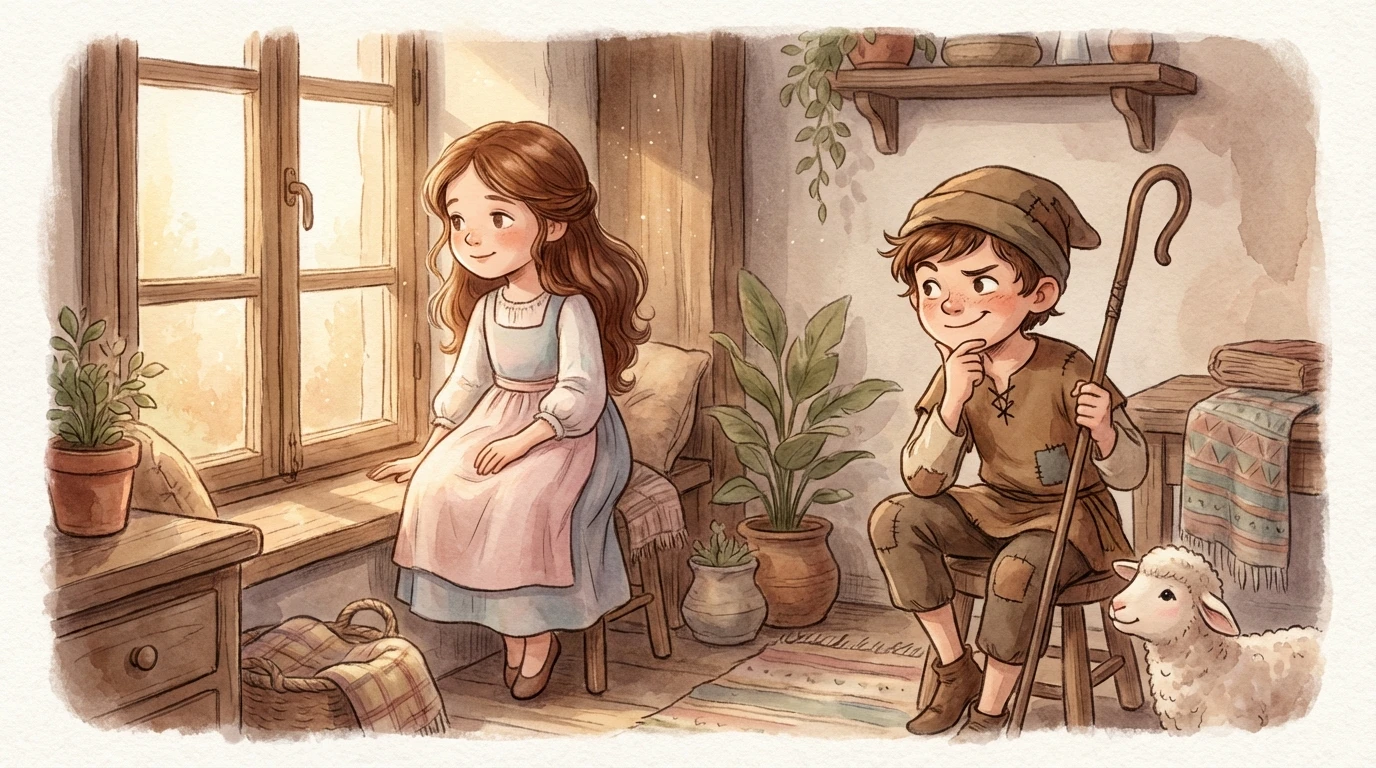
A Shepherd Boy tended his master's sheep near a dark forest not far from the village. Soon he found life in the pasture very dull. All he could do to amuse himself was to talk to his dog or play on his shepherd's pipe.
One day as he sat watching the sheep and the quiet forest, and thinking what he would do should he see a Wolf, he thought of a plan to amuse himself.
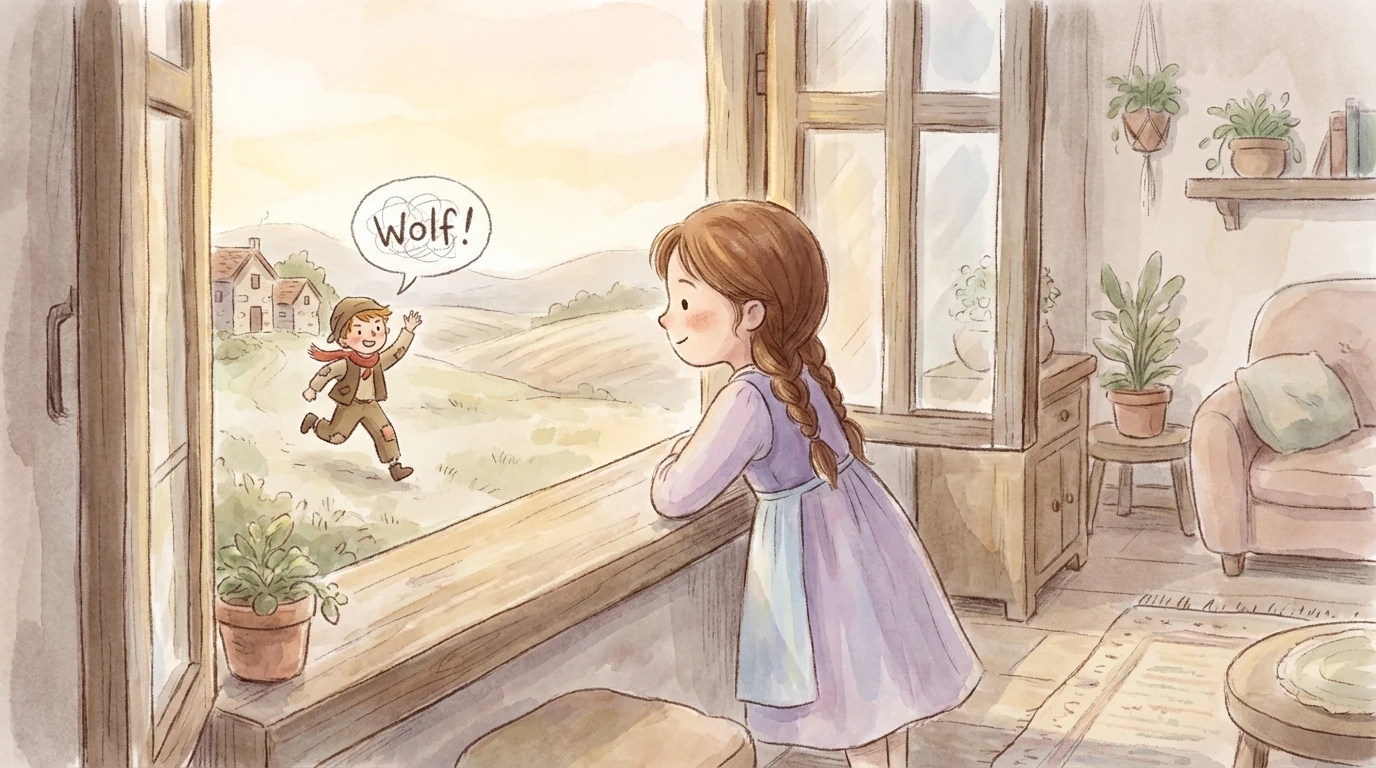
His Master had told him to call for help should a Wolf attack the flock, and the Villagers would drive it away. So now, though he had not seen anything that even looked like a Wolf, he ran toward the village shouting at the top of his voice, "Wolf! Wolf!"
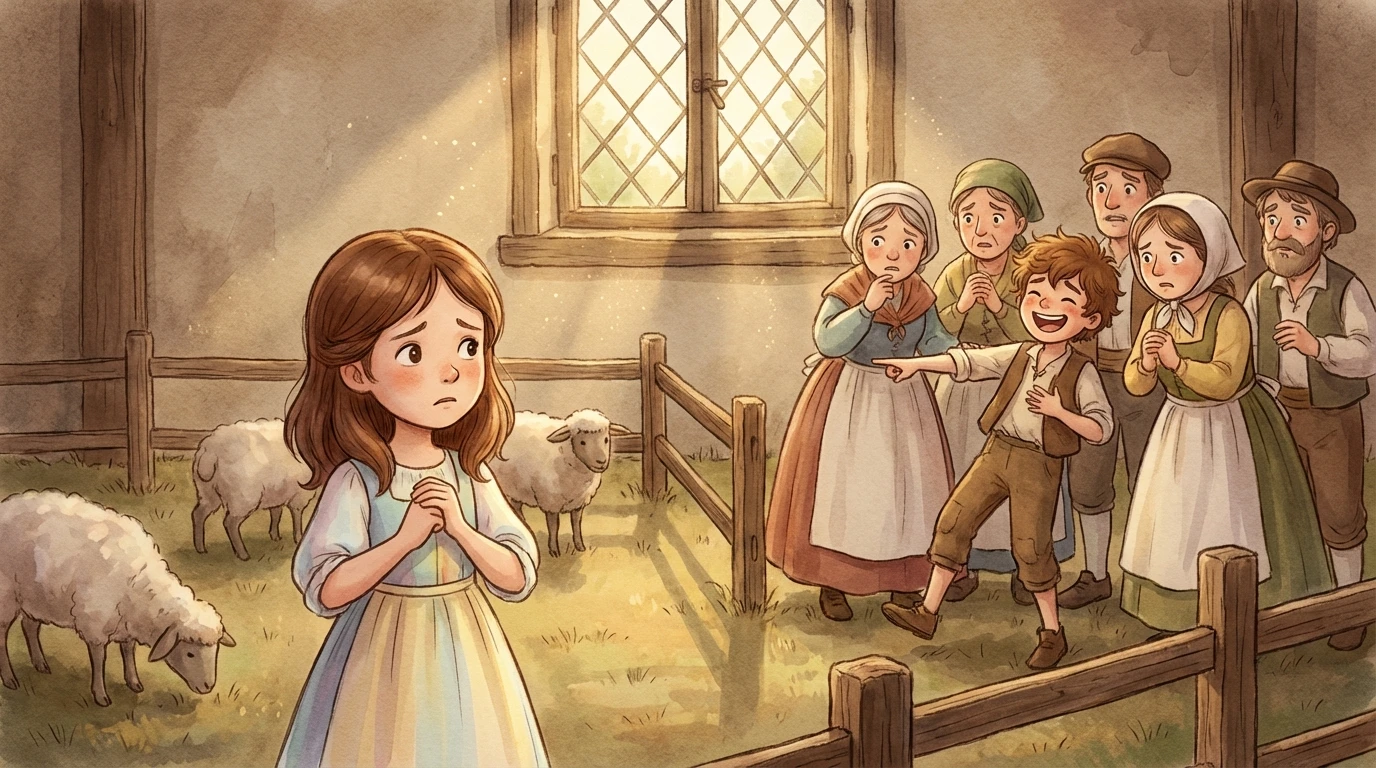
As he expected, the Villagers who heard the cry dropped their work and ran in great excitement to the pasture. But when they got there they found the Boy doubled up with laughter at the trick he had played on them.
A few days later the Shepherd Boy again shouted, "Wolf! Wolf!" Again the Villagers ran to help him, only to be laughed at again. But the Boy only laughed at them for their pains.
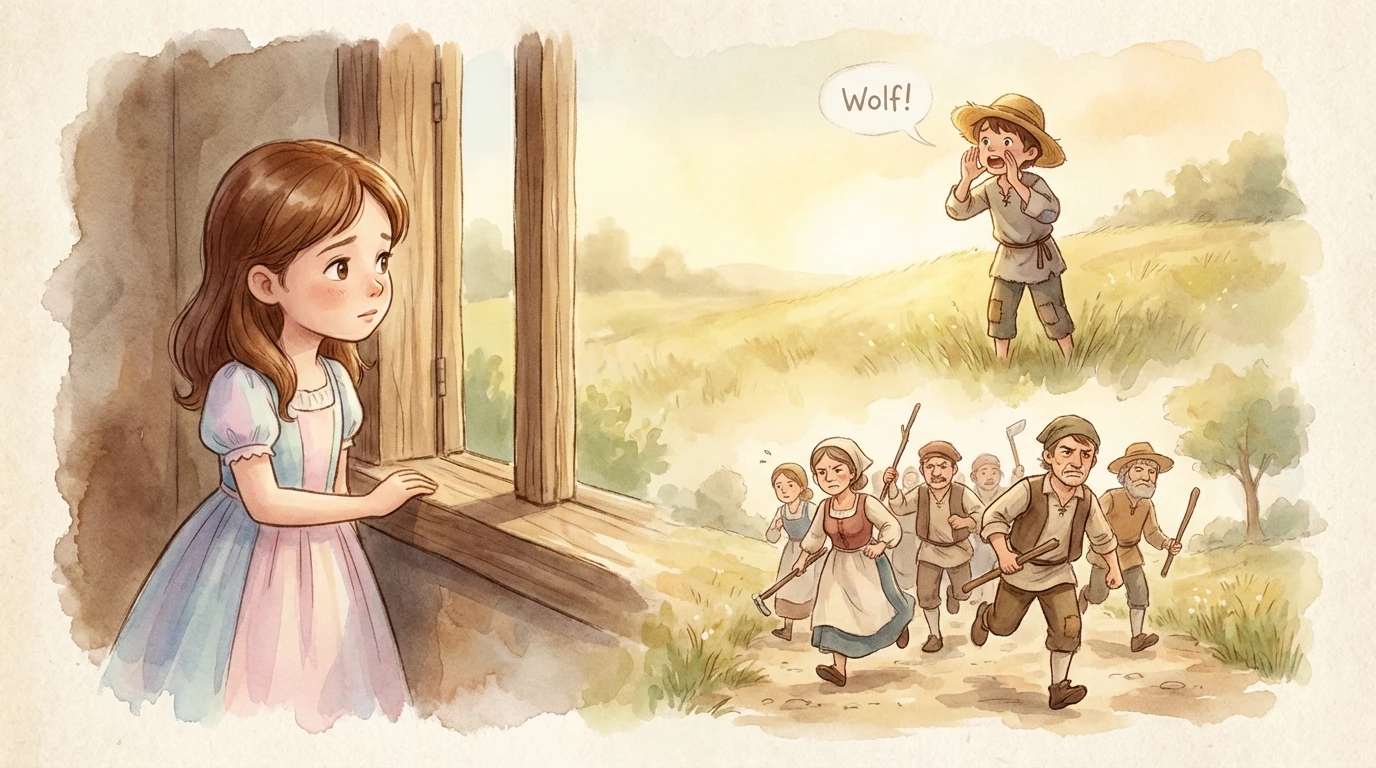
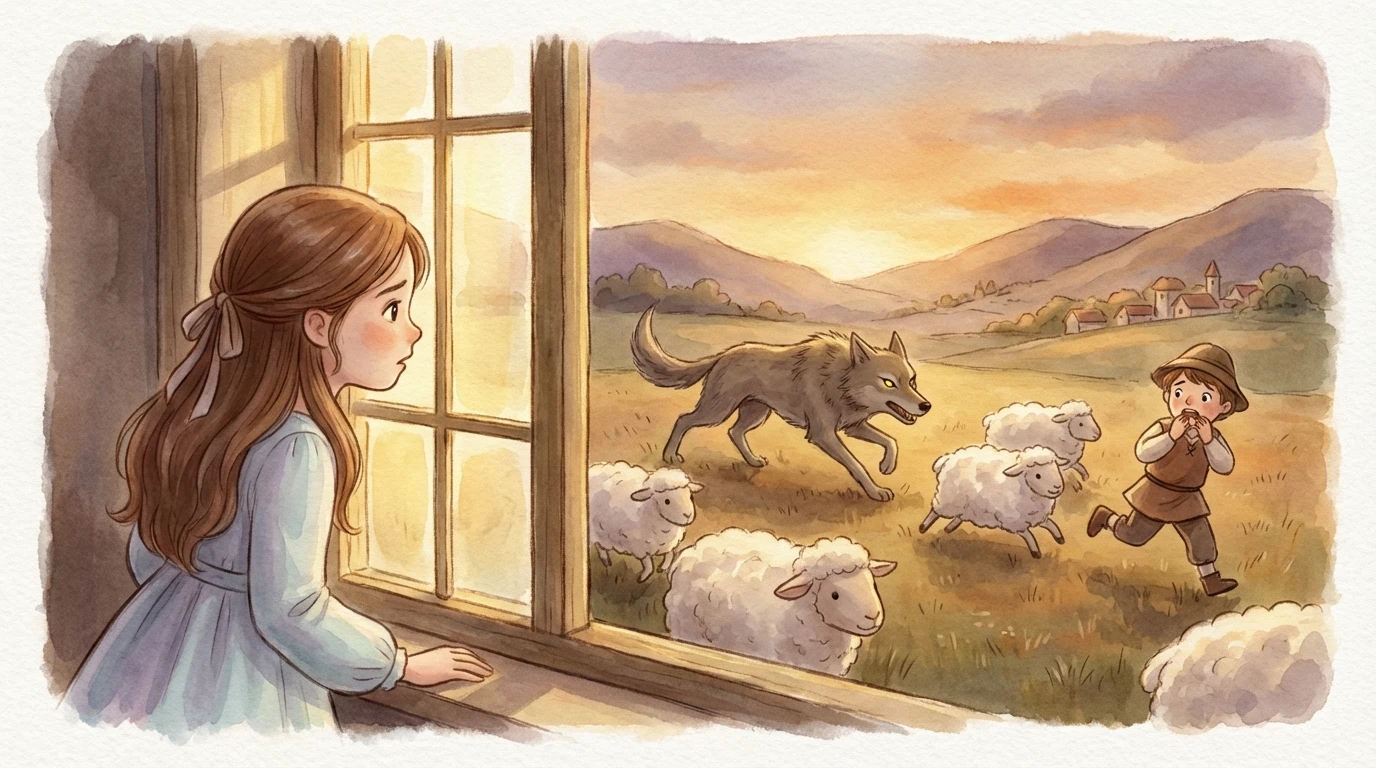
Then one evening as the sun was setting behind the forest and the shadows were creeping out over the pasture, a Wolf really did spring from the underbrush and fall upon the sheep. In terror the Boy ran toward the village shouting "Wolf! Wolf!" But though the Villagers heard the cry, they did not run to help him as they had before. "He cannot fool us again," they said. The Wolf killed a great many of the Boy's sheep and then slipped away into the forest.
Introduction
Discover 'The Shepherd Boy & the Wolf,' a timeless tale by Aesop that teaches children aged 6-8 about the importance of honesty and the consequences of deceit.
About Aesop
Aesop was a storyteller believed to have lived in ancient Greece between 620 and 564 BCE. Known for his fables, Aesop's stories have been used for centuries to teach moral lessons to children and adults alike.
Values and Lessons
Loading story...
The Shepherd Boy & the Wolf
Discover 'The Shepherd Boy & the Wolf,' a timeless tale by Aesop that teaches children aged 6-8 about the importance of honesty and the consequences of deceit.
Origin of the Tale
Aesop's fables, including 'The Shepherd Boy & the Wolf,' originated in ancient Greece and have been passed down through generations. These stories were created to teach moral lessons using simple narratives and animal characters. 'The Shepherd Boy & the Wolf' is one of Aesop's most famous tales, illustrating the timeless human values of honesty and trust. The fables have been translated into numerous languages and adapted in various cultures, showcasing their universal appeal and enduring relevance.
About Aesop
Aesop was a storyteller believed to have lived in ancient Greece between 620 and 564 BCE. Known for his fables, Aesop's stories have been used for centuries to teach moral lessons to children and adults alike.
Values and Lessons
Honesty: The story illustrates the importance of telling the truth by showing the shepherd boy's loss of credibility after lying.
Trust: It highlights how trust can be easily broken by deceit and how difficult it is to regain once lost.
Consequences: The tale teaches that actions have consequences, as the boy's lies led to a lack of help when he truly needed it.
Activities and Games
🎨Discussion Activity: Discuss with children why honesty is important and how trust is built and lost. Ask them to share experiences where honesty was crucial.
💬Creative Activity: Have children draw their own version of the story, imagining a different ending where the shepherd boy learns his lesson earlier.
✨Learning Activity: Create a role-play activity where children act out the story, allowing them to experience the emotions of the characters and understand the consequences of their actions.
Frequently Asked Questions
❓What is the moral of The Shepherd Boy & the Wolf?
The story emphasizes the importance of honesty and how repeated lies can destroy trust. It teaches children that when they lie, people may not believe them even when they are telling the truth.
❓Who wrote The Shepherd Boy & the Wolf?
The story was written by Aesop, a storyteller from ancient Greece, known for his fables that impart moral lessons.
❓What age is this story appropriate for?
This story is suitable for ages 6-8 because it uses simple language and a clear narrative to convey its moral lessons about honesty and trust.