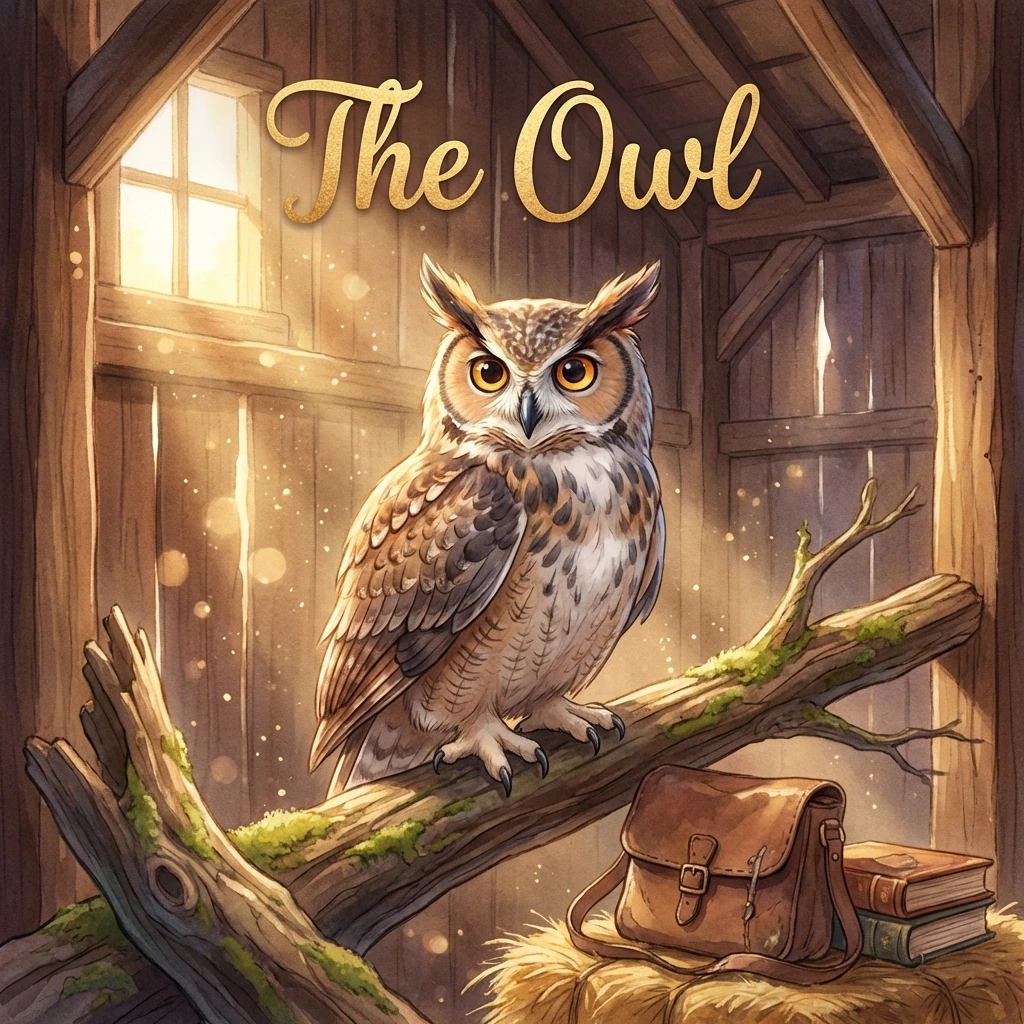
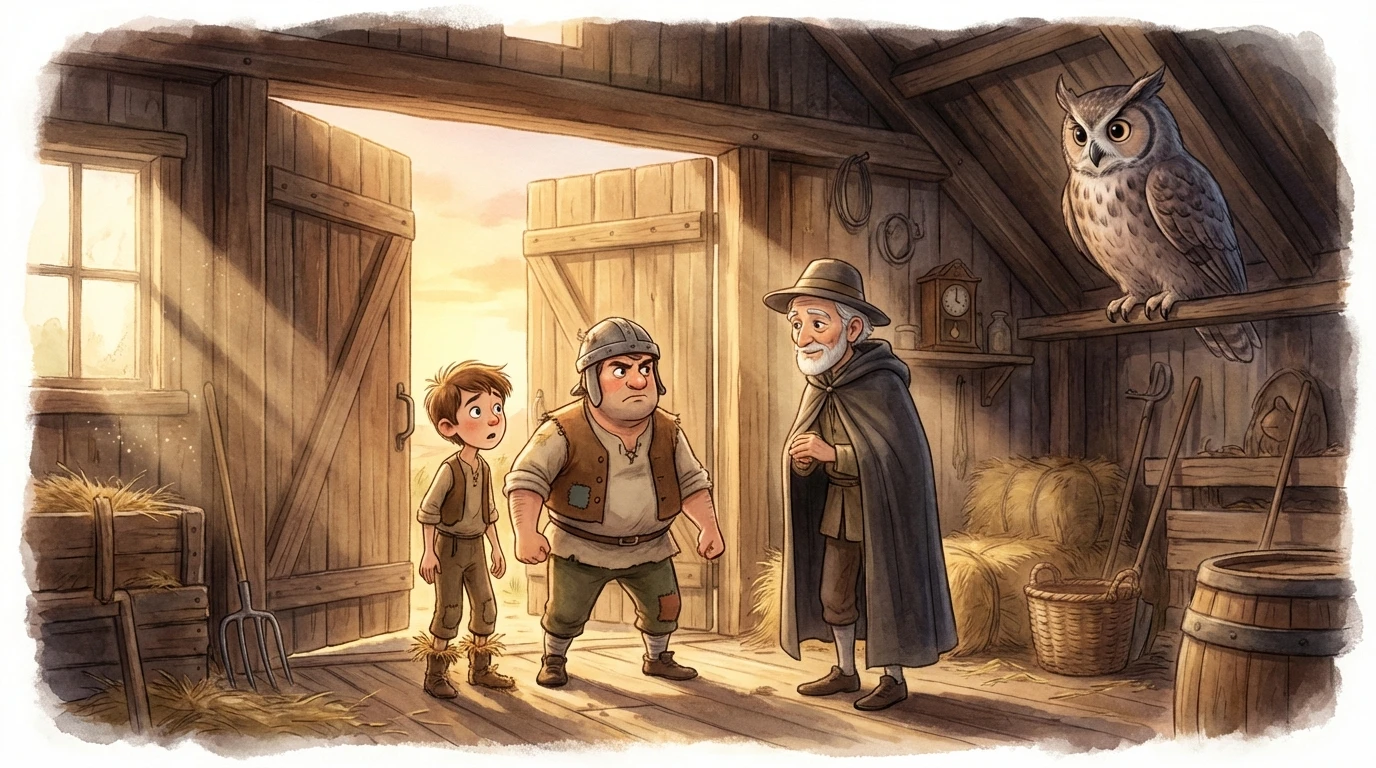
Many years ago, in a small town, people were not as quick to understand nature as we are today. One night a horned owl flew from the woods into a barn and, at sunrise, stayed very still in a shadowy corner, waiting for dusk to fly home.
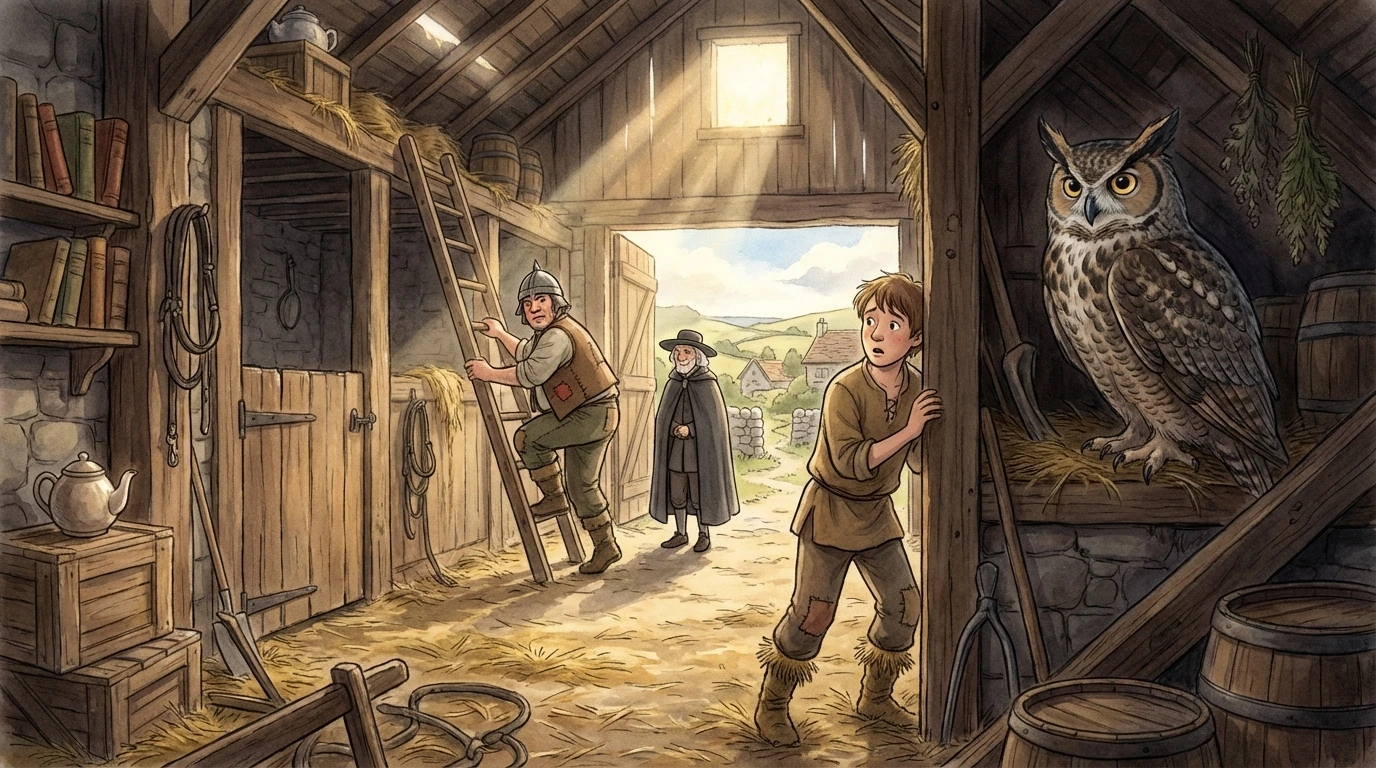
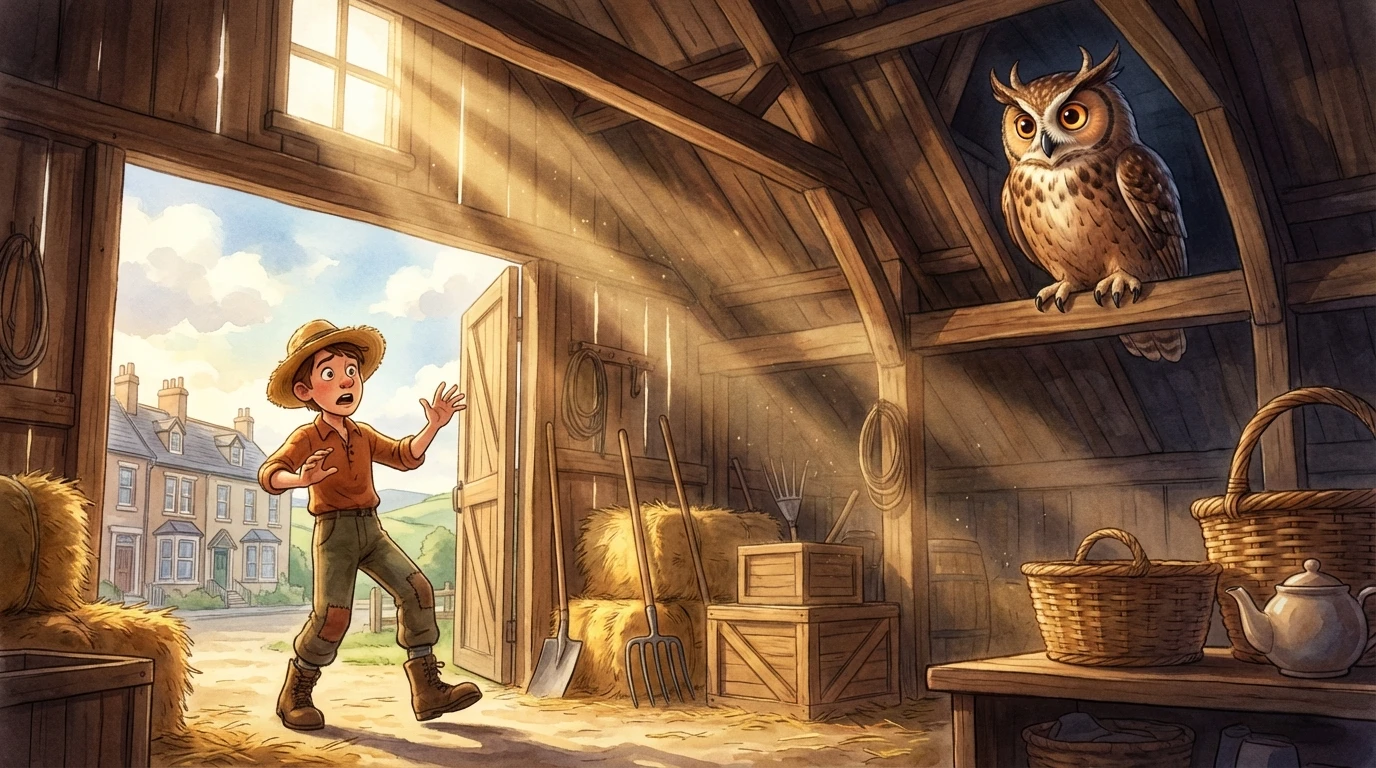
In the morning a farmhand entered the barn for straw. He saw the owl's round eyes and feathered tufts and hurried out, certain he had discovered a strange monster.
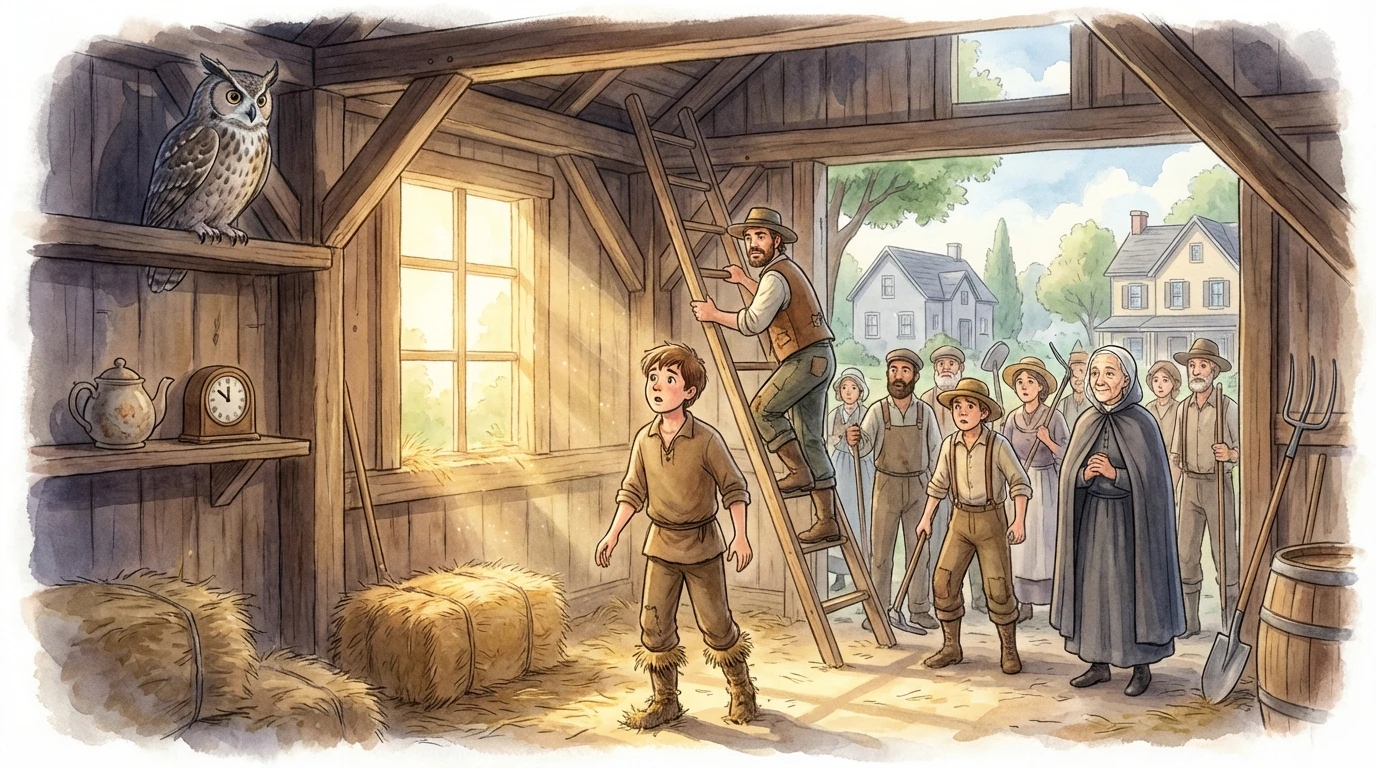
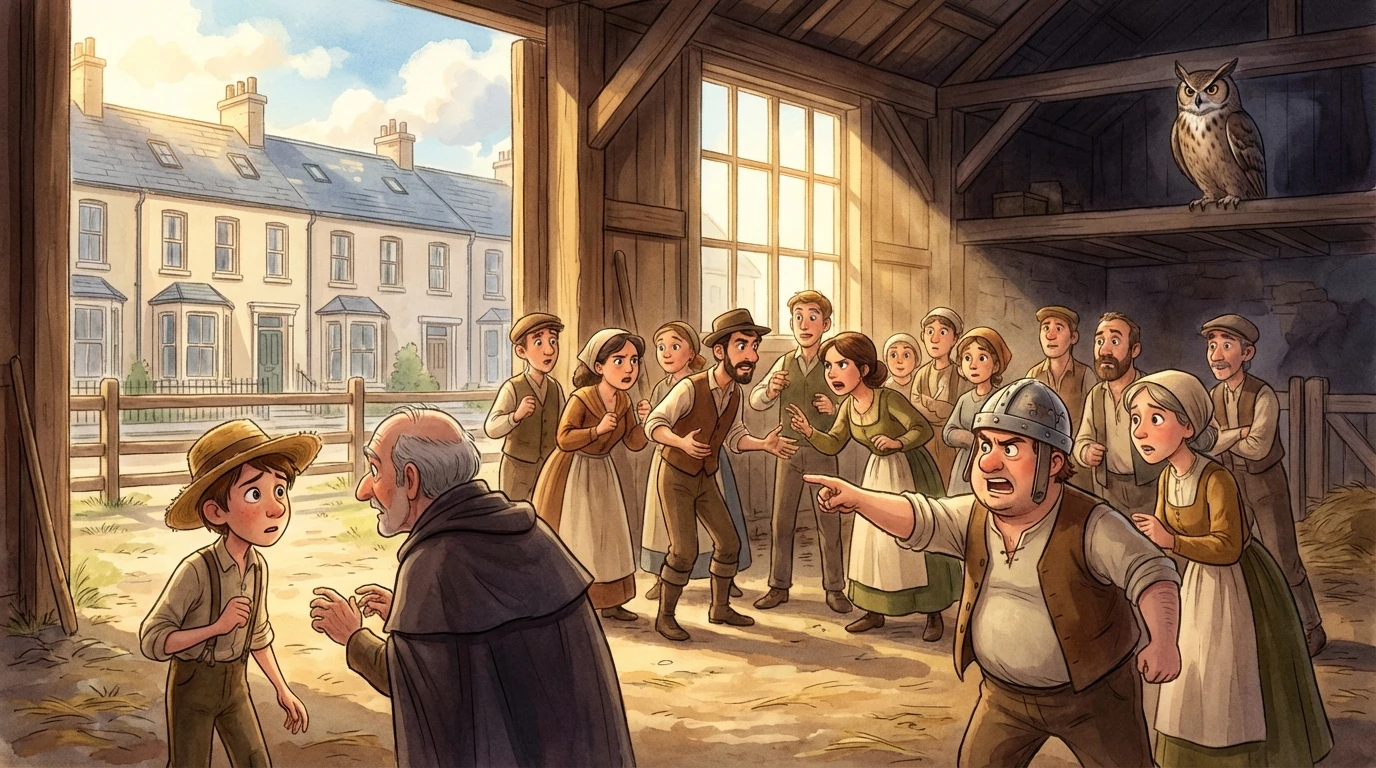
His master went to look and, though brave, felt startled too. Soon the neighbors gathered with tools and loud worries, and even the mayor and council came to help.
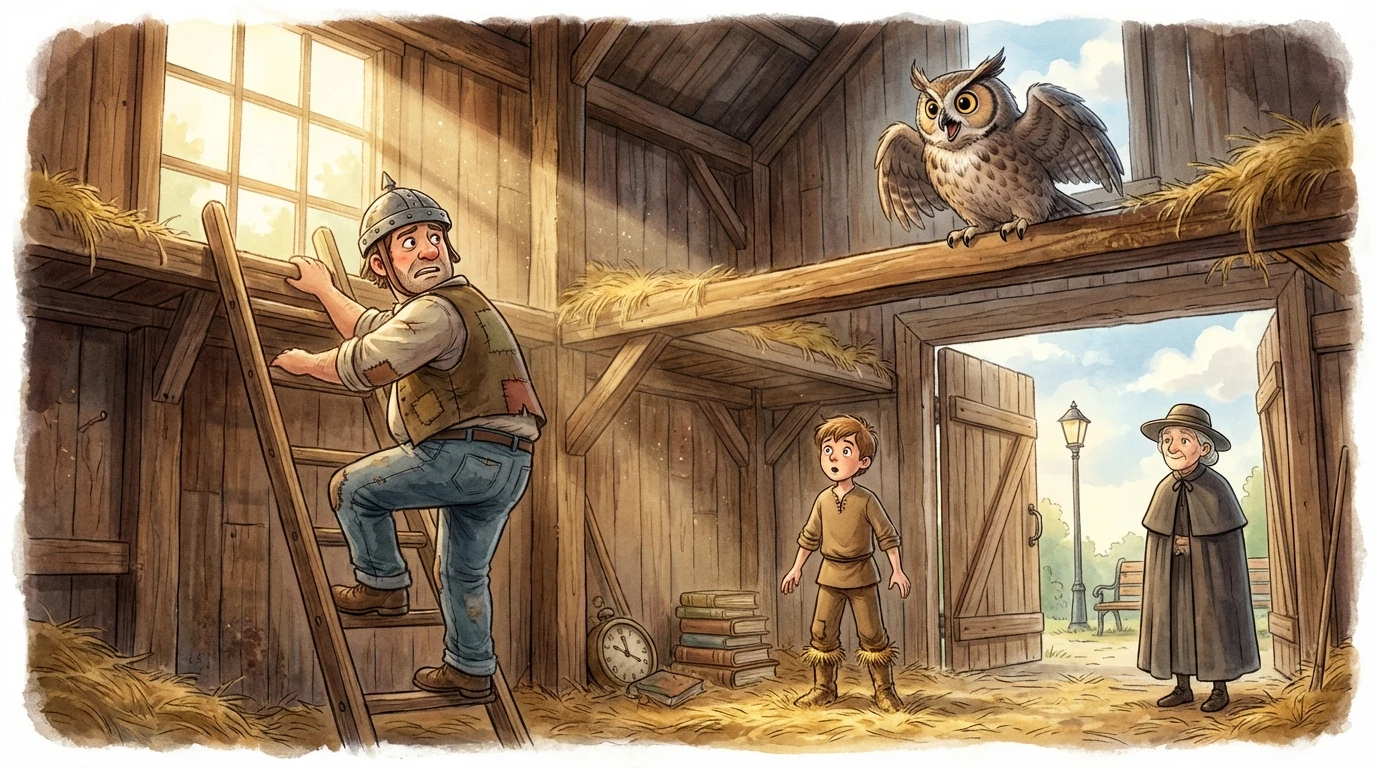
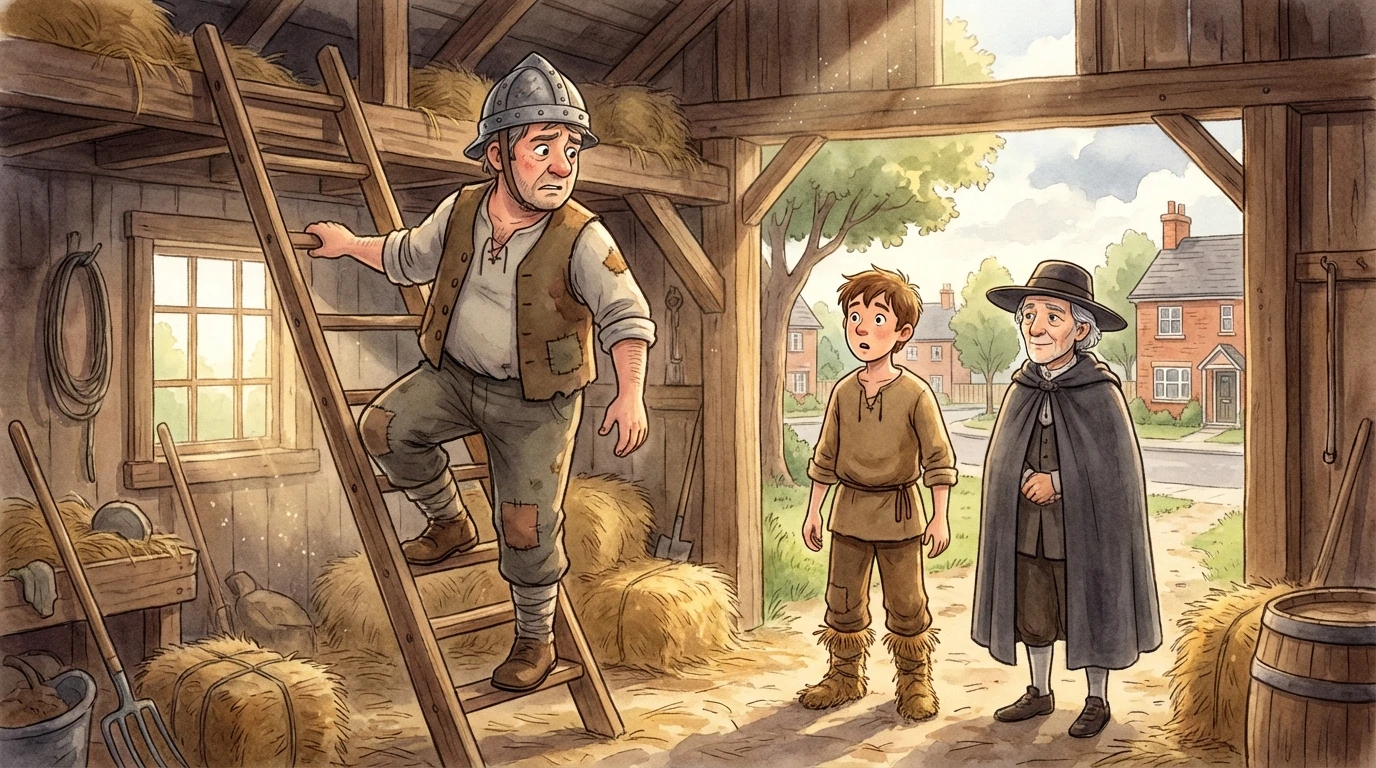
One bold townsman put on a helmet and climbed a ladder toward the beam where the owl perched. The owl, confused by the noise, fluffed her feathers and called, Tu-whit, tu-whoo.
The man paused, felt his knees shake, and carefully climbed down again. No one wished to harm a creature, yet no one knew what to do.
They argued in the yard. Some feared the bird might break loose and frighten the town. Others said, Let us think kindly and wisely.
The mayor at first suggested buying the hay and shutting the barn until the creature left, but the daylight still scared the owl.
At last a calm elder spoke: Owls hunt at night and rest by day. If we darken the barn and open the big doors at sunset, the owl will find her way back to the woods.
The plan sounded simple and good. So they covered the windows with cloth, made the barn quiet, and when the sky turned purple, they opened the doors wide.
The chatter stopped. The owl blinked, spread her wings, and with a soft sweep glided out into the evening air. She circled once above the roofs, then sailed toward the friendly trees.
The townspeople cheered, not because they had fought a monster, but because they had learned something new. From that day on, whenever a wild creature wandered near, they listened first, asked questions, and chose gentle, sensible help.
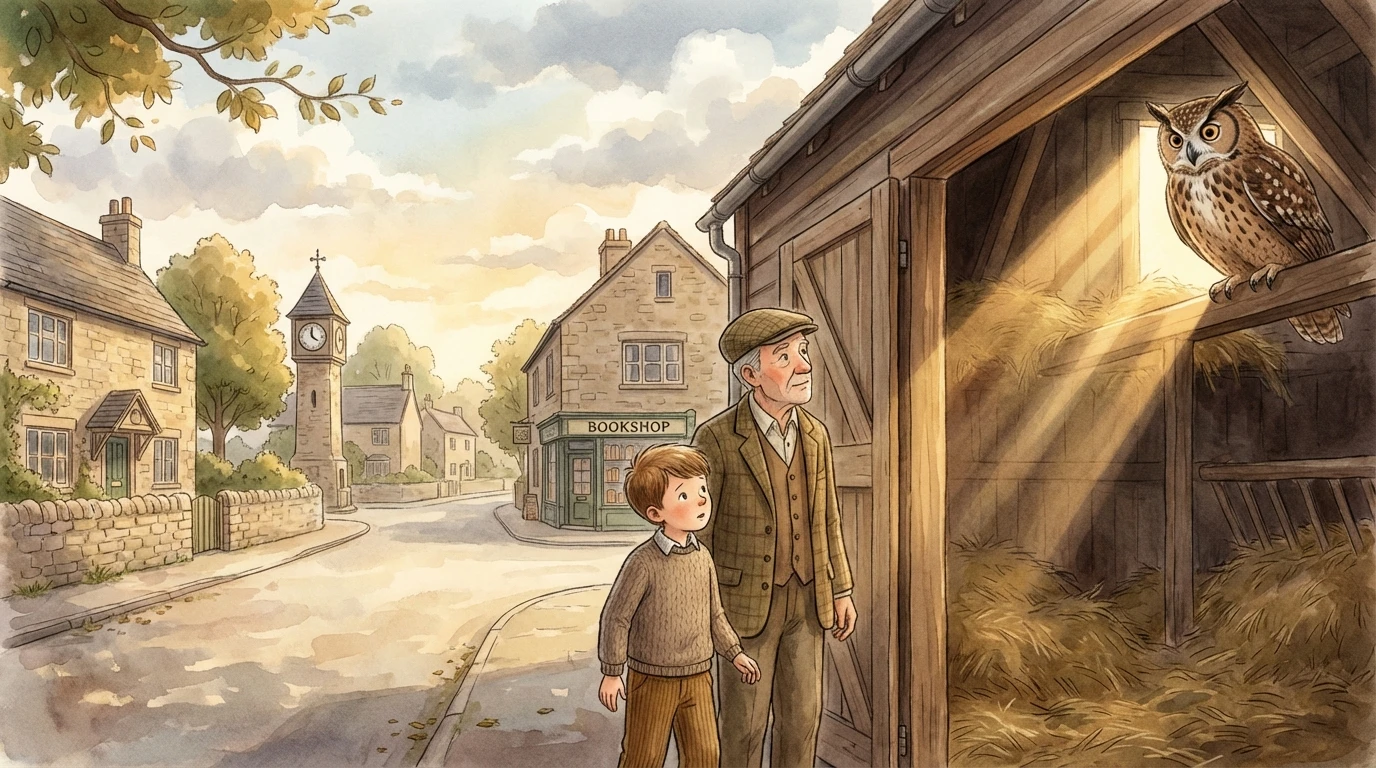
And if anyone doubted the tale, the townsfolk would smile and say, Come and see our barn, where an owl once taught us to be wiser.